
Cybersecurity · Atlanta
Cybersecurity Services in Atlanta
DESSS helps Atlanta payment processors, fintechs, carriers, health systems and corporate headquarters protect cardholder data, customer APIs, cargo systems and patient records, with assessment, implementation and managed security support from one accountable team.
What cybersecurity services does DESSS offer in Atlanta?
DESSS offers Atlanta organizations end-to-end cybersecurity work: Microsoft security hardening (Active Directory, Entra, Defender, Intune, and Purview), identity and privileged access, SOC and MDR, penetration testing and red teaming, cloud and Zero Trust security, endpoint and data protection, GRC including PCI DSS readiness, application and API security, and OT and IoT security.
You can engage DESSS for a single assessment, a defined implementation project, or ongoing managed support. DESSS is a Texas firm headquartered in Houston that works with Atlanta businesses across these services.
- Home
- Cybersecurity
- Cybersecurity Services in Atlanta
ATLANTA
Protecting the Card Rails, Cargo Feeds and Corporate Campuses of Atlanta
Atlanta is often called Transaction Alley because so much of the country's card and payment traffic is processed by companies in the metro. That concentration shapes the security conversation here. A payments startup in Midtown lives or dies by its PCI DSS assessment and the integrity of its merchant APIs. A forwarder near Hartsfield-Jackson Atlanta International Airport moves air cargo on booking and customs data that cannot go stale. A hospital network shares records with physician groups, labs and payers across Georgia. Each one needs security that fits how money, freight or patient information actually moves through the business.
The DESSS cybersecurity consulting practice approaches that work as engineering rather than paperwork. We look at the systems that create revenue, trace how an attacker would reach them, and then harden identity, cloud, endpoints and applications in the order that reduces the most risk. Because the same team can assess and implement, an issue such as an over-privileged payment service account or an unprotected admin API gets fixed instead of sitting in a report.
DESSS is a Texas firm headquartered in Houston, and it works with Atlanta companies on scoped projects and longer advisory relationships. Most engagements begin with a focused review of one high-value area, such as the cardholder data environment, a customer-facing API or the Microsoft 365 tenant used by a corporate headquarters, and grow from there once leadership can see where the real exposure sits.
LOCAL RISK PICTURE
Why Atlanta Companies Invest in Cybersecurity Services
Attackers follow the money and the data. Here that leads them to payment flows, partner integrations, airport-linked supply chains and the large corporate tenants that hold all of it together.

Payment data draws targeted attacks
Processors, acquirers and fintechs handle card numbers, tokens and merchant credentials. Skimming scripts, credential stuffing and API abuse aim straight at those flows, and PCI DSS scope keeps growing as products add features.

APIs are the new perimeter
Atlanta fintech and SaaS products expose APIs to merchants, banks and mobile apps. Broken authorization in a single endpoint can leak account data that no firewall would ever see.

Air cargo runs on time-critical data
Forwarders, carriers and warehouses around the airport depend on booking, tracking and customs systems. Ransomware or a hijacked mailbox can stall shipments and reroute payments within hours.

Health records invite extortion
Hospitals, specialty practices and health IT vendors in the region hold protected health information that extortion groups target, and clinical downtime affects patient care directly.

Large tenants hide old risk
Corporate headquarters often run Active Directory forests and Microsoft 365 tenants that have absorbed acquisitions for years, leaving stale admins, legacy trusts and unmonitored service accounts.

Assessors and buyers want evidence
QSAs, SOC 2 auditors, enterprise procurement teams and cyber insurers ask for proof of MFA, logging, segmentation and tested recovery. Collecting it in a rush is costly and error-prone.
PLATFORMS & SERVICES
Cybersecurity Platforms & Services for Atlanta Businesses
Clients draw on the full DESSS security catalogue: five Microsoft security platforms and ten security domains. Every card below opens a service page that explains scope, deliverables and engagement options.
Microsoft security platforms
Microsoft Active Directory
AD DS design, hardening, migration, and forest recovery for the on-premises identity core.

Microsoft Entra
Entra ID, Conditional Access, PIM, and identity governance for cloud identity and Zero Trust.

Microsoft Defender
Defender XDR and Microsoft Sentinel SIEM deployed, tuned, and run as a working detection capability.

Microsoft Intune
Intune security baselines, Autopilot provisioning, and co-management for compliant devices.

Microsoft Purview
Information protection, DLP, records management, and eDiscovery across Microsoft 365.
Security domains

IAM & PAM
Joiner-mover-leaver lifecycle, SSO and MFA, RBAC design, and privileged access control.

SOC & MDR
SIEM implementation, detection engineering, threat hunting, and incident response.

VAPT & Red Team
Vulnerability assessment, penetration testing, and red and purple team exercises.

Cloud Security
Posture management, cloud entitlements, workload and container security, IaC guardrails.

Zero Trust
Next-generation firewalls, segmentation, Zero Trust network access, and SASE.

Endpoint Security
EDR and XDR, email threat protection, endpoint hardening, and patch management.

Data Protection
Encryption and key management, immutable backup, disaster recovery, and continuity.
GRC
Risk register, policy and framework development, audit readiness, and vCISO advisory.

Application Security
Threat modeling, SAST and DAST, secrets management, and secure pipelines in the SDLC.

OT / ICS / IoT Security
OT assessment, Purdue-model segmentation, SCADA monitoring, and IoT device security.
MICROSOFT SECURITY
Microsoft Security Solutions for Atlanta Organizations
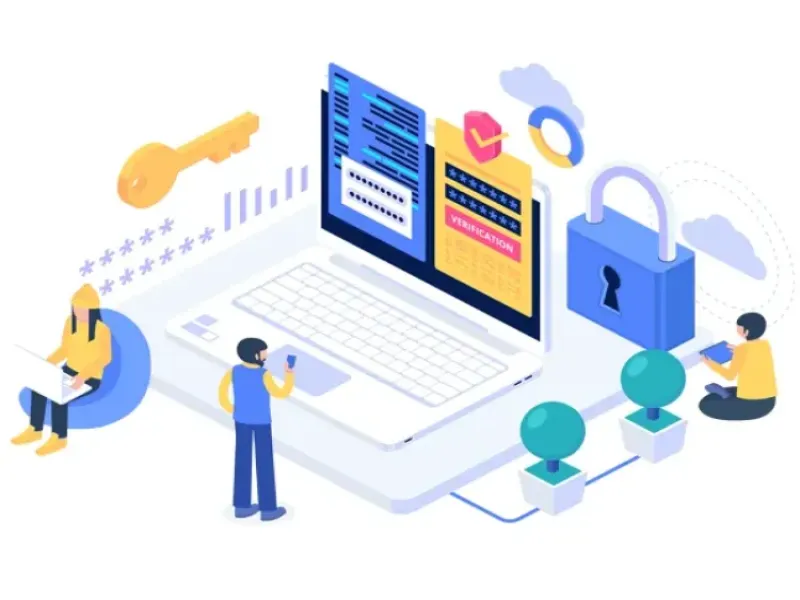
What does Microsoft security cover? Microsoft security is the combination of Active Directory, Microsoft Entra, Microsoft Defender, Microsoft Intune and Microsoft Purview that protects identities, devices, email, cloud apps and sensitive data, much of which companies already pay for in their Microsoft 365 and Azure agreements without switching it on.
Atlanta headquarters frequently manage thousands of employees, franchise or field staff and outside agencies in one tenant. DESSS reviews that tenant end to end, closes the gaps attackers use first, such as legacy authentication and standing admin rights, and then turns on detection and data controls in stages your help desk can support.
For payments and fintech teams, we also map Microsoft controls to PCI DSS requirements, so identity, logging and endpoint evidence from Entra, Defender and Microsoft Sentinel can be reused at assessment time instead of rebuilt by hand.
Microsoft Active Directory — Attack-path cleanup and admin tiering for Active Directory forests that grew through years of acquisitions and spin-offs.
Microsoft Entra — Phishing-resistant MFA and Conditional Access for employees, contractors and agency staff who sign in from many locations.
Microsoft Defender — Defender XDR and Microsoft Sentinel detections tuned for payment fraud, business email compromise and account takeover.
Microsoft Intune — Device compliance policies for corporate laptops, warehouse scanners and clinician mobile devices under one management plane.
Microsoft Purview — Data classification and DLP rules that recognize cardholder data, patient information and unreleased media content.
IDENTITY, DETECTION & TESTING
Identity, Monitoring and Offensive Testing in Atlanta
These five areas control who gets in, how quickly suspicious activity is spotted, and whether your defenses hold up under a realistic attack.
IAM & PAM
What do IAM and PAM do? Identity and access management (IAM) governs how people sign in and what they can reach, through single sign-on, multi-factor authentication and role-based access. Privileged access management (PAM) places tighter controls, vaulting and monitoring around administrator, database and service accounts.
In an Atlanta payments company, the riskiest identities are often the engineers and support staff who can reach production databases and key management systems. We design least-privilege roles, put just-in-time elevation and session recording in front of the cardholder environment, and automate joiner-mover-leaver steps so departing staff lose access the same day.
- Least-privilege role design
- Just-in-time admin elevation
- Automated access reviews and offboarding
SOC & MDR
How do SOC and MDR services work? A security operations center (SOC) collects logs, correlates them in a SIEM and investigates suspicious activity. Managed detection and response (MDR) provides that monitoring, threat hunting and response as an ongoing service rather than an in-house build.
Atlanta fintechs and carriers need detections for fraud-adjacent behavior: unusual API key use, impossible-travel logins to merchant portals, and mailbox rules that hide invoice changes. DESSS can stand up Microsoft Sentinel or tune your current SIEM, add threat hunting, and run or co-manage monitoring with your staff, with an incident response retainer behind it.
- Detection coverage gap analysis
- SIEM onboarding and use-case tuning
- Co-managed monitoring and threat hunting
VAPT, penetration testing & red team
What does a penetration test include? A penetration test is an authorized simulated attack. Vulnerability assessment finds known weaknesses at scale, while manual penetration testing chains them together to prove real impact. Red team exercises test whether people and detection tools notice a goal-driven intrusion.
For Atlanta clients, the most valuable scope is usually the customer-facing product: checkout flows, merchant dashboards, mobile banking apps and partner APIs. We run web application penetration testing and segmentation testing that supports PCI DSS, then retest fixes so your assessor sees closed findings rather than open tickets.
- Web, API and mobile app testing
- PCI DSS segmentation testing
- Red and purple team scenarios
Cloud security consulting
What does cloud security involve? Cloud security protects the accounts, identities, networks and data that run in AWS, Microsoft Azure and similar platforms. It includes configuration hardening, entitlement management, workload and container protection, and continuous posture monitoring.
Many regional fintech and health IT products are built cloud-first on AWS or Azure, sometimes by teams moving faster than their guardrails. We review account structure, lock down storage and key vaults that touch cardholder or patient data, trim excessive IAM roles, and add policy-as-code checks to the deployment pipeline.
- AWS and Azure account hardening
- Key vault and storage exposure review
- Policy-as-code and posture alerts
Zero Trust and network security
What is Zero Trust security in practice? Zero Trust replaces implicit network trust with explicit verification. Each request is checked against user identity, device health and context, access is limited to what is needed, and networks are segmented so one compromised system cannot reach everything.
For a corporate campus or distribution center in the Atlanta region, that typically means moving remote staff and agencies from broad VPN tunnels to Zero Trust network access, isolating the cardholder data environment and warehouse networks, and cleaning up firewall rules that accumulated over years of mergers.
- Cardholder environment isolation
- ZTNA and SASE rollout planning
- Firewall and VPN rule cleanup
PROTECTION, GOVERNANCE & OPERATIONS
Endpoints, Data, Compliance and Connected Systems in Atlanta
These areas protect devices and sensitive records, keep auditors and card brands satisfied, and extend security to warehouses, cargo facilities and connected devices.
Endpoint and email security
What does endpoint and email security protect? Endpoint security uses EDR or XDR, hardened configurations and disciplined patching to stop malware and hands-on-keyboard attacks on laptops, servers and mobile devices. Email security filters phishing, impersonation and malicious attachments before users see them.
Finance, logistics and media teams are frequent targets of vendor-impersonation emails that try to change bank details or release shipments. We deploy and tune EDR, enforce SPF, DKIM and DMARC, strengthen email security and anti-phishing rules, and harden point-of-sale and kiosk devices that sit outside the corporate office.
- EDR rollout and alert tuning
- DMARC enforcement and impersonation controls
- Kiosk and POS device hardening
Data protection and cyber resilience
What is data protection and resilience? Data protection keeps sensitive information private, intact and recoverable. It covers classification, encryption and key management, data loss prevention, and backup and recovery designs that ransomware cannot tamper with.
For payment firms, the heart of this work is encryption and key management around card data and tokens. For hospitals and carriers, it is proving that clinical or cargo systems can be restored quickly. We run a ransomware readiness assessment, design immutable backups, and rehearse recovery with the teams who would do it.
- Tokenization and key custody review
- Immutable backup and restore design
- Recovery rehearsals with business owners
GRC and compliance
How does GRC support compliance? Governance, risk and compliance (GRC) sets security policy, measures risk and demonstrates control effectiveness to auditors, customers and regulators. It includes risk assessments, policy frameworks, third-party risk management, audit preparation and virtual CISO guidance.
Companies here often carry PCI DSS for payments, SOC 2 for enterprise buyers, HIPAA for health data and SOX for a public parent, all at once. We build a single control library mapped to each, run third-party risk reviews of processors and SaaS suppliers, and support audit readiness with evidence that is collected continuously.
- PCI DSS and SOC 2 gap assessment
- Unified control library and policies
- Vendor risk reviews and vCISO guidance
Application security and DevSecOps
What does application security cover? Application security makes software resistant to attack from design through deployment. It combines threat modeling, secure code review, static and dynamic testing, dependency and secrets scanning, and pipeline controls, usually described together as DevSecOps.
Fintech and SaaS teams in Atlanta ship payment features and partner integrations every week. We embed threat modeling in sprint planning, add SAST, dependency and secrets scanning to CI/CD, and perform API security testing focused on object-level authorization, rate limits and token handling, where payment APIs are most often broken.
- Threat modeling for payment features
- CI/CD scanning and secrets control
- API authorization and abuse testing
OT, ICS and IoT security
What are OT and IoT security? Operational technology (OT) security protects control systems and the connected equipment that run physical operations. IoT security covers networked devices such as sensors, cameras, scanners and building systems that are hard to patch and easy to overlook.
Around the Atlanta airport and along its freight corridors, warehouses and cargo facilities rely on conveyor controls, handheld scanners, temperature sensors and building management systems. We inventory those devices, segment them from corporate networks, apply IoT device security baselines and replace unmanaged vendor remote access with controlled sessions.
- Connected device inventory
- Warehouse and facility network segmentation
- Vendor remote access controls
INDUSTRIES
Industries We Support in Atlanta
Each sector brings a different mix of regulation, data and downtime risk. These are the industries where DESSS engagements usually focus.
Fintech and payment processing
Processors, gateways and fintech platforms: PCI DSS scoping and segmentation, API testing, key management and fraud-focused detection.
Logistics and air cargo
Forwarders, carriers and warehouses near the airport: email fraud defenses, connected device segmentation and recovery planning for shipping systems.
Healthcare and health IT
Hospitals, practices and health technology vendors: HIPAA risk analysis, clinical system resilience and protection of patient data in Microsoft 365.

Media and entertainment
Broadcasters, studios and digital publishers: account takeover protection, content leak prevention and secure collaboration with outside talent and agencies.
Telecommunications
Carriers and communications providers: privileged access to network management systems, SIM-swap and fraud monitoring, and segmentation of operations networks.
Corporate headquarters
Large multi-brand enterprises: Active Directory consolidation after acquisitions, SOX-aligned access controls and governance reporting for boards.
ASSESSMENT PROCESS
How an Atlanta Cybersecurity Assessment Runs
A cybersecurity assessment reviews your systems, controls and processes against a recognized framework and produces a prioritized plan. With DESSS it runs in six stages.
01
Define what is at stake
Together we name the assets that would hurt most if compromised, such as card data, a merchant API, cargo tracking or patient records, and set scope and testing rules.
Signed scope and rules of engagement02
Map the environment
Workshops and discovery tools catalogue identities, cloud accounts, applications, endpoints, data flows and network segments, including third-party connections.
System and data-flow map03
Probe the defenses
Configurations are checked against CIS benchmarks and vendor guidance, vulnerabilities are scanned, and agreed penetration tests show what an attacker could actually reach.
Evidence-backed findings04
Align with obligations
Each finding is tied to the frameworks you answer to, such as PCI DSS, SOC 2, HIPAA or NIST CSF, so compliance gaps are visible alongside technical ones.
Framework gap matrix05
Prioritize by impact
Risks are scored on likelihood and business consequence, from revenue loss and fines to shipment delays, giving executives a clear order of work.
Ranked risk register06
Build the roadmap
We convert the register into a phased plan with owners, effort estimates and quick wins, and can implement it alongside your team.
Phased remediation planWHY DESSS
Why Atlanta Organizations Choose DESSS
DESSS is a Texas technology consulting firm headquartered in Houston with a dedicated cybersecurity practice. Clients across the metro bring us in for these reasons.
Contact DESSS about a security review
Findings that get fixed
The consultants who identify a weakness in identity, cloud, applications or networks can also remediate it, so work does not stall between an auditor and an integrator.
Payments-aware testing
Penetration tests, segmentation checks and API reviews are scoped with PCI DSS evidence in mind, which saves rework before an assessor visit.

Microsoft security depth
Active Directory, Entra, Defender, Sentinel, Intune and Purview are core DESSS practice areas, a good fit for corporate headquarters standardized on Microsoft.
Deliverables you keep
Risk registers, architecture designs, runbooks and test evidence are handed over in writing so your team can maintain them after the engagement.

Engagements sized to the need
Choose an assessment, an implementation, integration or migration work, managed support, or training and change management, rather than a fixed bundle.
FAQ
Cybersecurity Services in Atlanta: Frequently Asked Questions
What cybersecurity services does DESSS provide in Atlanta?
DESSS provides cybersecurity assessments, implementation projects and managed support for Atlanta organizations.
The scope includes Microsoft security, IAM and PAM, SOC and MDR, penetration testing, cloud and Zero Trust security, endpoint and data protection, GRC and PCI DSS readiness, application and API security, and OT and IoT security.
How can a cybersecurity consultant help businesses in Atlanta?
A cybersecurity consultant identifies the weaknesses most likely to cause real damage and helps you close them in a sensible order.
For Atlanta businesses that often means shrinking PCI DSS scope, testing customer-facing APIs, hardening a large Microsoft 365 tenant and preparing evidence for auditors and insurers.
Does DESSS provide cloud security consulting for Atlanta companies?
Yes.
DESSS secures AWS and Microsoft Azure environments, covering account structure, identity and entitlement cleanup, storage and key vault exposure, Kubernetes and container security, infrastructure-as-code checks and continuous posture monitoring.
Can DESSS perform penetration testing for Atlanta fintech and payment companies?
Yes.
DESSS performs web application, API, mobile and network penetration testing, PCI DSS segmentation testing, Active Directory attack path reviews and red and purple team exercises. Findings are reproducible, ranked by impact and retested after fixes.
What is Zero Trust security?
Zero Trust is an approach that grants no access by default.
Every user and device must prove identity and health before each request, permissions are kept to the minimum needed, and the network is divided so an intruder who gets in cannot move freely.
What cybersecurity platforms and technologies does DESSS support?
DESSS supports Microsoft Active Directory, Entra ID, Defender XDR, Microsoft Sentinel, Intune and Purview, plus AWS and Azure native security services.
Identity projects also cover SailPoint, CyberArk, Okta and Ping Identity when clients already run them.
How does a cybersecurity assessment work?
A cybersecurity assessment defines the critical assets, maps the environment, tests controls, aligns findings with frameworks such as PCI DSS or NIST CSF, ranks risks by business impact and delivers a phased remediation roadmap with owners.
Which industries in Atlanta benefit from cybersecurity consulting?
Fintech and payment processing, logistics and air cargo, healthcare, media, telecommunications and corporate headquarters are the Atlanta sectors where cybersecurity consulting most often pays off.
Each faces different pressure, from card data protection to shipment continuity and patient privacy.
Why should Atlanta businesses choose DESSS for cybersecurity consulting?
DESSS pairs assessment with hands-on remediation across Microsoft, cloud, application and network security, so you work with one accountable team.
DESSS is a Texas firm headquartered in Houston, and every engagement ends with written deliverables your staff can maintain.
Can DESSS help an Atlanta company prepare for a PCI DSS assessment?
Yes.
DESSS helps scope the cardholder data environment, reduce it through segmentation and tokenization, test the segmentation, close control gaps and organize evidence before the QSA review. DESSS does not act as the QSA itself.
Does DESSS secure warehouse and air cargo systems in the Atlanta area?
Yes.
DESSS inventories scanners, sensors, conveyor controls and building systems, separates them from corporate networks, controls vendor remote access and plans recovery for the shipping and tracking systems that cargo operations depend on.
NEXT STEP
Plan Your Atlanta Security Assessment
Tell us which system would hurt most to lose, whether a payment API, a cargo platform, a clinical application or your Microsoft tenant, and DESSS will propose an assessment scoped around protecting it.
RELATED
Related Cybersecurity Pages
The main DESSS cybersecurity page, the same services in other locations, and related reading.
Cybersecurity at DESSS
Cybersecurity services in other locations
- Cybersecurity Services in Houston
- Cybersecurity Services in Dallas
- Cybersecurity Services in San Antonio
- Cybersecurity Services in Austin
- Cybersecurity Services in El Paso
- Cybersecurity Services in Plano
- Cybersecurity Services in Fort Worth
- Cybersecurity Services in New York
- Cybersecurity Services in New Jersey
- Cybersecurity Services in Chicago